

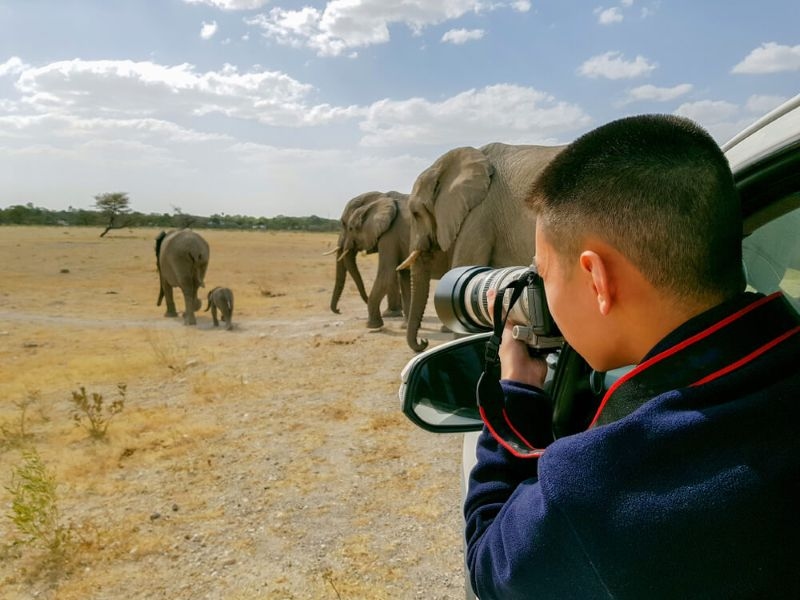
Getting started in nature photography does not require a massive bank account or a professional background. Many people assume that capturing a stunning image of a bird in flight or a deer in the woods requires thousands of dollars' worth of optical glass. That is simply not the case. With some basic knowledge of Wildlife Photography Tips, anyone can start taking beautiful photos of animals in their natural habitat. Beginner Wildlife Photography is about patience and understanding the environment more than it is about having the most expensive camera on the market. There is a huge misconception that you need a giant lens to get a good shot. While a long reach helps, many successful photographers started with Wildlife Photography on a Budget by using what they already had or buying used equipment. Nature photography tips often focus on gear, but the real secret lies in how you use your eyes and move through the woods.
The first step for most people is finding the right tools without overspending. It is possible to find Cheap Photography Gear that performs exceptionally well in daylight. You do not need the latest mirrorless body to get sharp results. Instead, look for older DSLR models that still have great sensors and fast autofocus systems.
Using a beanbag is a great way to save money while keeping your camera steady on a fence post or a car window. This approach helps you maintain Wildlife Photography on a Budget while still achieving the sharpness required for high-quality images.
Further Reading: Master Your Camera With Advanced Photography Techniques
Once you have your gear, the next step is learning how to use it effectively in the field. One of the most important Wildlife Photography Tips is to learn about your subject before you even head outside. Knowing where an animal eats or when it is most active will give you a massive advantage. This preparation is a core part of Beginner Wildlife Photography and helps you avoid aimless wandering.
If the eyes are not in focus, the entire Image will feel disconnected. What this really means is that even a slightly blurry tail is acceptable as long as the gaze of the animal is sharp and clear.
Buying brand-new items is rarely necessary when you are just starting. Many professionals trade in their older lenses, which means you can find high-quality glass at a fraction of the cost. Finding Cheap Photography Gear involves checking local camera shops or online marketplaces that offer warranties on used items. This is the smartest way to handle Wildlife Photography on a Budget.
Investing in a third-party lens can save you hundreds of dollars. These lenses often provide 90% of the performance of name-brand versions, making them perfect for those practicing Beginner Wildlife Photography.
Explore More Tips: Photo Composition Tricks for Instantly Improving Your Skills
Technique will always beat gear in the long run. Even with the best Wildlife Photography Equipment, a poor composition will result in a boring photo. Learning the rule of thirds and how to frame your subject within the trees or grass is vital. These Nature photography tips help you create a story rather than just a snapshot.
When you sit at the same level as a duck or a squirrel, the perspective changes entirely. It creates an intimate feeling that makes the viewer feel part of the animal's world.
To get the most out of your Wildlife Photography Equipment, you must understand the settings. Using a wide aperture helps blur the background, making your subject stand out. This is one of the most effective Nature photography tips for creating professional-looking images with entry-level kits.
Backyard birds are the perfect subjects for practicing your Wildlife Photography Tips. They move quickly and provide a great challenge for testing your autofocus speed and tracking abilities without the need for travel.
Respecting the environment is just as important as getting the shot. No photo is worth distressing an animal or destroying its habitat. This is a primary rule in Beginner Wildlife Photography that every person should follow. Staying at a distance and using your zoom lens helps keep the wildlife calm and natural.
By being a silent observer, you will be able to see more interesting behaviors. Animals that are not threatened will be able to go about their business, and you will be able to get unique shots that others may not see.
Discover More Insights: Smartphone Photography Tips for Clear and Creative Shots
Starting your journey with Wildlife Photography Tips is a good way to get connected with nature. By channeling your focus to Beginner Wildlife Photography and acquiring Cheap Photography Gear, you can hone your skills without spending a fortune. Remember, however, that Wildlife Photography on a Budget is totally possible with the right attitude and a lot of practice. So, start capturing your world now!
One of the best ways to protect your gear without spending much is to use a simple plastic bag and a rubber band. Cut a hole for the lens to peek through and secure it tightly. This keeps moisture away from the electronics while allowing you to keep shooting in damp conditions.
The best time to photograph animals is usually during the early morning or late afternoon. These times are known as the golden hours because the light is warm and soft. Most animals are also more active during these cooler parts of the day, providing more opportunities for great shots.
While phones have limits for distant subjects, they are great for macro shots of insects or reptiles. You can get very close to small creatures and use the high-resolution sensors to capture incredible detail. It is a good way to practice composition before moving on to dedicated cameras and lenses.
Blurry photos are often caused by a shutter speed that is too slow to capture the animal's movement. To fix this, increase your shutter speed to at least 1/500 second. If you are in low light, you may need to increase your ISO setting to maintain that fast speed.
This content was created by AI